What Is the Skin Barrier, and How Do You Know If Yours Is Damaged?
By Savannah Osmundson
"Barrier repair" is printed on a lot of jars right now. The phrase refers to something real and fairly specific: the outermost layer of the epidermis, the stratum corneum, and the job it does keeping water in and the outside world out. This article walks through what the research says that layer is made of, what goes wrong when it is not working well, and which everyday habits the dermatology literature actually supports for getting it back on track.
What is the skin barrier made of?
The stratum corneum is a thin stack of flattened dead cells, called corneocytes, held together in a matrix of lipids. A 2016 review by van Smeden and Bouwstra in Current Problems in Dermatology describes that lipid matrix as dominated by three classes: cholesterol, free fatty acids and ceramides. According to the review of stratum corneum lipids, those lipids arrange themselves into densely packed, stacked layers, and the way they are ordered depends on their composition. Two functions follow from that structure: limiting water loss through the epidermis, and stopping compounds from the environment from reaching the living layers underneath, where they could provoke an immune response.
Lipids are not the whole story. A 2024 narrative review by Fluhr and colleagues in the Journal of the European Academy of Dermatology and Venereology lists the other working parts: the corneocytes themselves, natural moisturizing factor, a range of enzymes and their inhibitors, antimicrobial peptides, and the lipids. The review of barrier function in dry, flaky and sensitive skin also notes that the barrier is not uniform. Its structure and performance vary across body sites, with age, and with skin type, and healthy function depends on how the barrier interacts with the skin's microbiome and the innate immune system.
What does a damaged barrier look like?
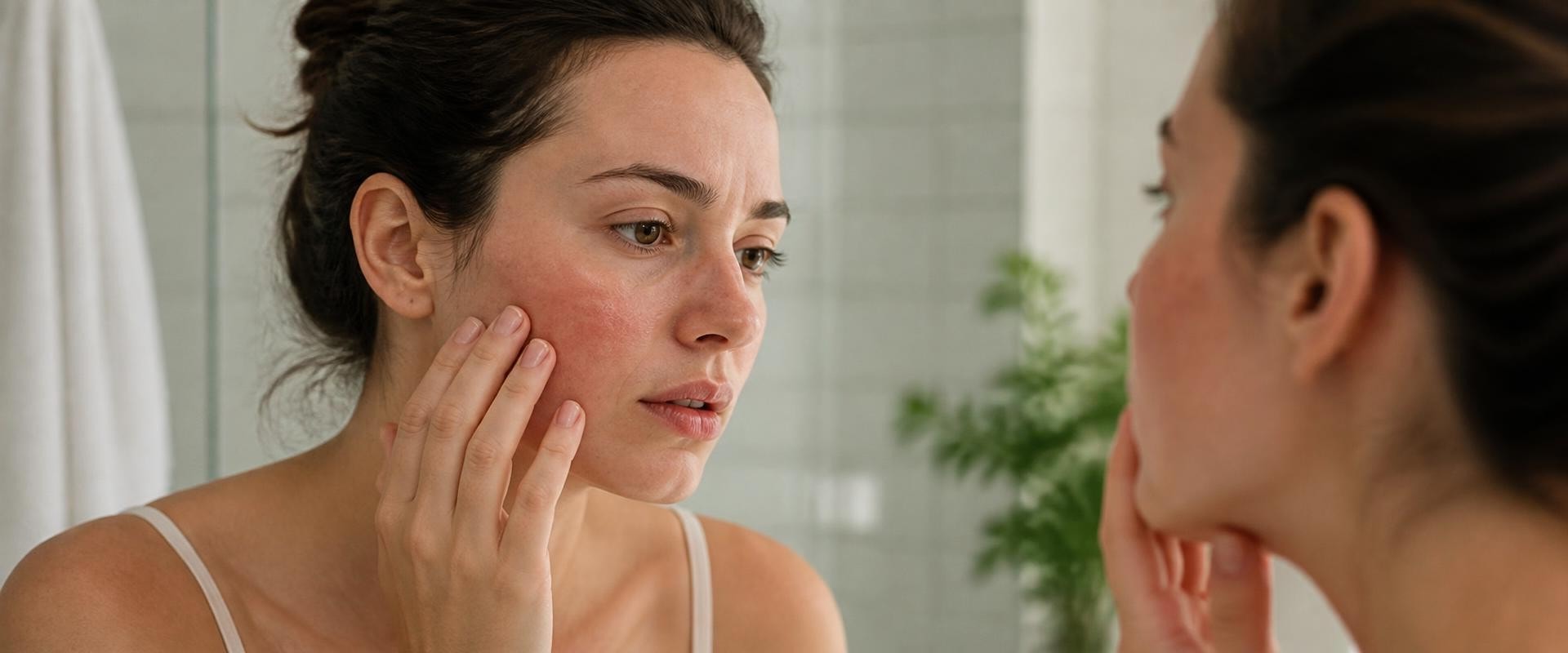
The same 2024 review ties dysregulated barrier function to the familiar trio of dry, flaky and sensitive skin. In practice that tends to show up as tightness after washing, visible flaking, stinging when products that used to be fine are applied, and redness that comes and goes. The authors are candid that the complete pathophysiology behind these states is not fully understood and that more studies are needed. That is worth keeping in mind when a product promises to fix "your barrier" in a set number of days: the mechanism is only partly mapped, so the marketing is running ahead of the science.
The 2016 lipid review adds a specific example of what a disrupted matrix looks like. In atopic dermatitis, the composition of the three main lipid classes changes, the carbon chain lengths of the lipids shift, and those changes alter how the lipids are organized. That altered organization correlates with impaired barrier function, and the authors found it in both lesional and non-lesional skin of people with the condition. The takeaway for everyone else is that barrier quality is a property of the lipid structure, not something a single hero ingredient switches on.
Which daily habits does the American Academy of Dermatology actually recommend?
The American Academy of Dermatology publishes a plain list of habits for relieving excessively dry skin, and most of them cost nothing. Its dermatologist tips for dry skin start with the shower: keep baths and showers to five to ten minutes, use warm rather than hot water, and pat the skin dry instead of rubbing. Apply moisturizer immediately while the skin is still damp, and again after washing your hands and whenever the skin feels dry.
On product choice, the AAD favours ointments and creams over lotions because they add more moisture, and it names the ingredients it suggests looking for: jojoba oil, dimethicone, glycerin, hyaluronic acid, lactic acid, lanolin, mineral oil, petrolatum and shea butter. It also draws a distinction that trips a lot of shoppers up. "Fragrance-free" is the label to look for. "Unscented" can mean a product contains chemicals that mask the smell of other ingredients, and those masking agents can irritate dry, sensitive skin.
While skin is very dry, the AAD advises avoiding alcohol-based products, fragrance including deodorant soaps, and retinoids. A humidifier in the bedroom, gloves for dishes and gardening, and loose cotton clothing instead of wool or polyester round out the list. One more point from the same page: ask a dermatologist before reaching for an anti-itch cream, since many of them contain ingredients that make overly dry skin worse.
Does niacinamide help the barrier, or is that just marketing?
Niacinamide, also written as nicotinamide, is one of the few "barrier" ingredients with a direct comparison trial behind it, although the study is small and was done in a specific group. In 2005, Soma and colleagues published a left-right comparison in the International Journal of Dermatology. Twenty-eight people with atopic dermatitis and dry skin on both forearms applied a 2% nicotinamide cream to one forearm and white petrolatum to the other, twice a day, for four or eight weeks.
The nicotinamide versus petrolatum study measured transepidermal water loss and stratum corneum hydration with instruments rather than questionnaires. Nicotinamide significantly reduced water loss through the skin; petrolatum did not show a significant effect on that measure. Both sides of the body became more hydrated, but the nicotinamide side gained significantly more. The authors concluded that the nicotinamide cream was the more effective moisturizer on atopic dry skin and suggested it as an adjunct to treatment.
Two cautions before anyone rewrites their routine around that. The participants had atopic dermatitis, so the result does not automatically transfer to skin that is dry for other reasons. And 28 people is a small sample. What the study does establish is that a 2% concentration, used twice daily, moved an objective barrier measurement in the right direction over one to two months. That is a more honest timeline than most packaging offers.
How should you sequence a routine while the barrier recovers?
Putting the sources together gives a simple order of operations. First, remove the things the AAD flags as irritants for very dry skin: fragrance, alcohol-based toners and retinoids, at least temporarily. Second, shorten and cool the shower and moisturize onto damp skin with a cream or ointment that carries one or more of the listed ingredients. Third, if you want an active, niacinamide at around 2% is the one with a direct barrier measurement behind it, and it took weeks rather than days to show its effect in that trial.
Resist the urge to layer several new products at once. If the skin stings or reddens, there is no way to tell which one caused it. The 2024 review's point about barrier function varying by body site also matters here: what the cheeks tolerate and what the shins tolerate are not the same question, and one product rarely suits both.
Frequently asked questions
- How long does barrier recovery take? The one direct trial cited here, on 2% nicotinamide, ran four to eight weeks before reporting its results. The AAD habits are meant to be ongoing rather than a short course. Neither source supports a fixed number of days.
- Is "unscented" the same as "fragrance-free"? No. The AAD notes that unscented products can contain chemicals that hide the odor of other ingredients, and those can irritate dry, sensitive skin. Look for the words "fragrance-free".
- Should I stop my retinoid if my skin is flaking? The AAD lists retinoids among the products to avoid while skin is excessively dry. When and how to restart is a question for a licensed provider who can see the skin.
- Can petrolatum alone repair the barrier? In the 2005 trial, white petrolatum increased hydration but did not significantly reduce transepidermal water loss over the study period. It remains on the AAD's list of recommended moisturizer ingredients.
- Does everyone's barrier work the same way? No. The 2024 review describes variation across body sites, age and skin type, and notes the underlying causes of dry, flaky and sensitive skin are still not fully understood.
This article is general information, not medical advice, and does not replace a consultation with a licensed provider.


